Vietnam-based · Building since 2017
Independent publishing systems built to compound.
We design, build and run 21+ websites, three products and two video channels from Vietnam, with AI-assisted workflows behind all of it.
Counted once per final live HTTPS address.
Each network is one content area with its own editorial system.
AI drafts and checks; one owner approves what ships.
Started as a one-person content project.
02 — Products / 03
Products built as complete public systems.
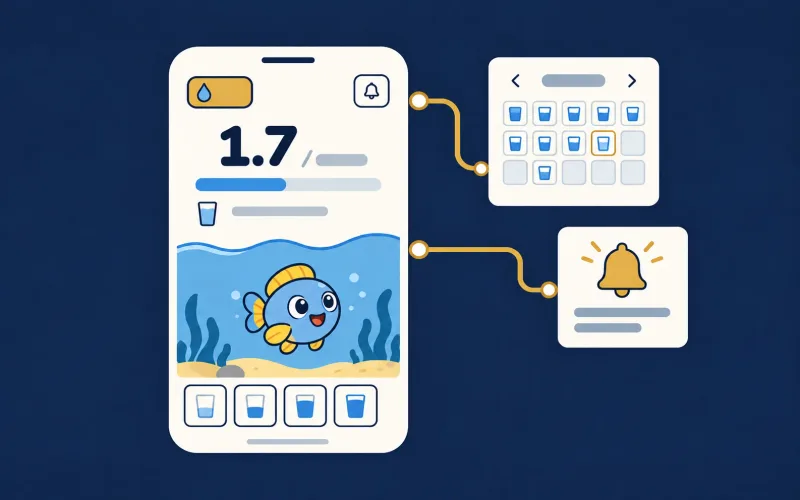
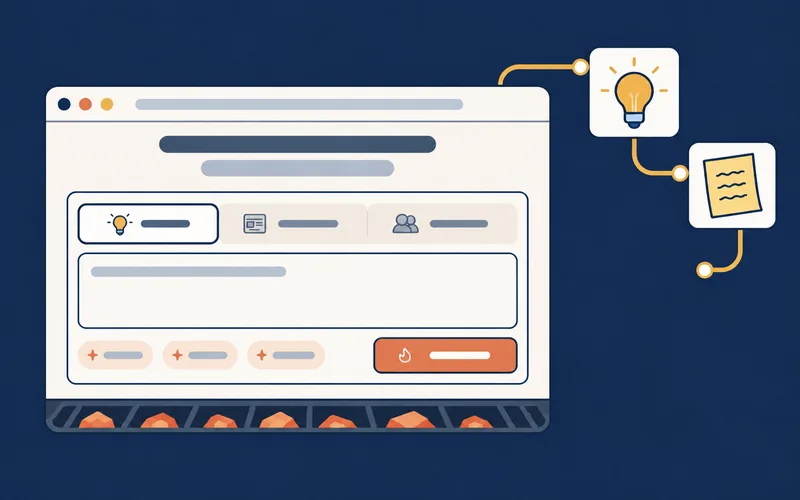
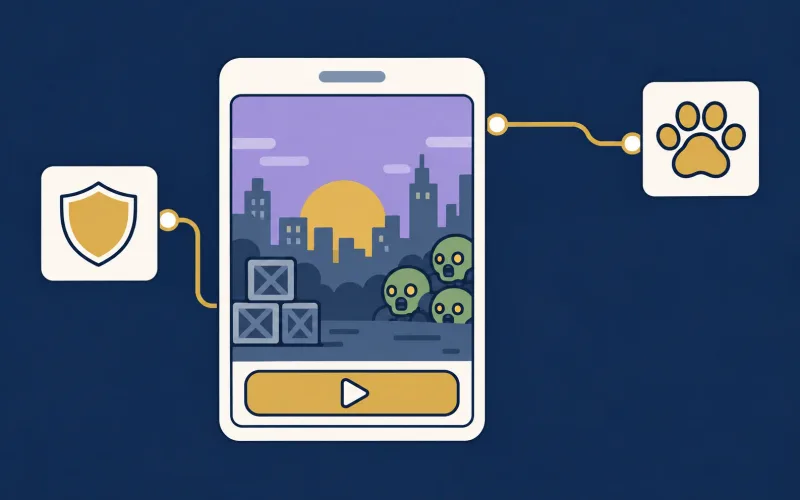
Three live products, each with its own brand, product UX and launch site.



03 — Operating model
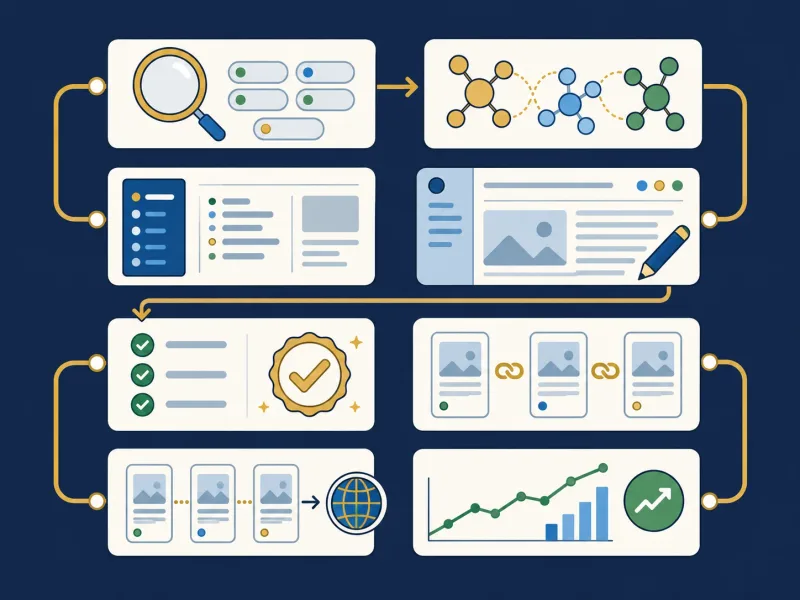
Eight steps from a question to a measured page.
Every site in the portfolio runs the same loop. Scroll to walk through it.
- 01Keyword research
Find the questions a topic has to answer.
- 02Topic map
Group those questions into one connected cluster.
- 03Outline
Set the page structure before any drafting starts.
- 04Draft
AI drafts from research that has already been checked.
- 05Review
A person checks the facts and approves the page.
- 06Templates
Reusable page and media parts keep every site consistent.
- 07Publish
The approved page goes live on its own site.
- 08Measure
Traffic and search data decide the next round.
04 — Publishing
The network is measured publicly without publishing its map.
21+ sites run in three private networks. Each network covers one content area with its own topic model and publishing rhythm. Domains, niches and links between sites stay private; the portfolio is reported as one total.
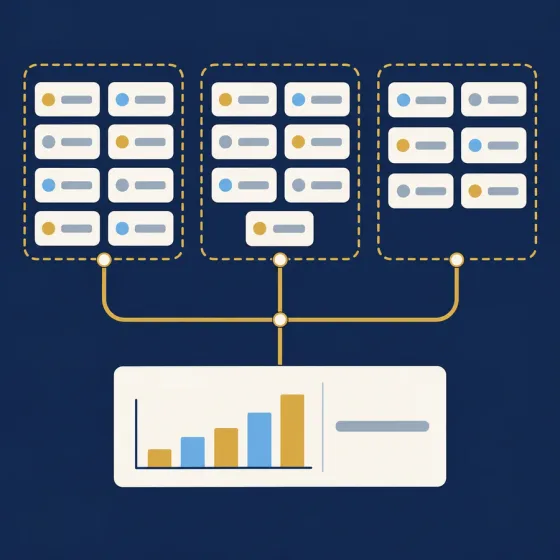
Private network
- Own topic model and internal links
- Own publishing rhythm
- Shared infrastructure, separate identity
Private network
- Own topic model and internal links
- Own publishing rhythm
- Shared infrastructure, separate identity
Private network
- Own topic model and internal links
- Own publishing rhythm
- Shared infrastructure, separate identity
Content architecture
Topic models, internal links and page structures are set before production starts.
Automation
AI tools move research and drafts forward; editorial decisions stay with one accountable owner.
Search operations
Coverage, gaps and performance are reviewed for the whole portfolio.
Distribution
Publishing queues and channel handoffs keep output moving.
Media templates
Reusable visual and motion systems keep every format consistent.
05 — Media
One idea, more than one format.
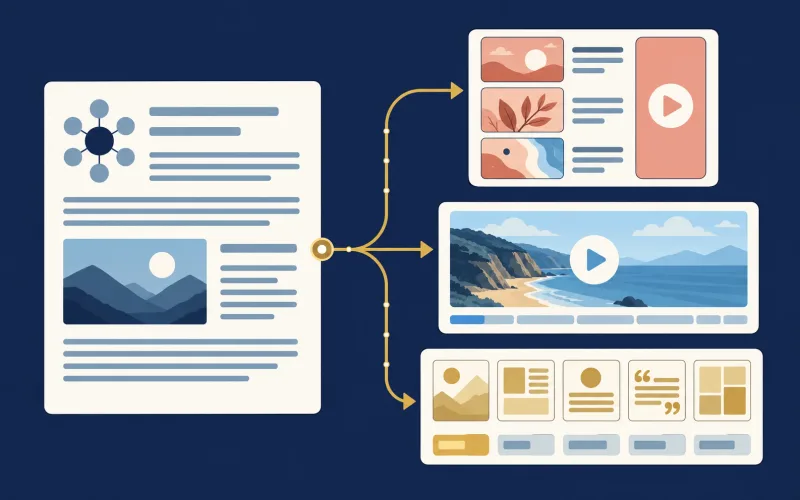
Research that passes review becomes short video, longer video and reusable templates.
GIAIMAAINEWS
Reviewed research becomes short-form video.
Evergreen video
One YouTube channel turns durable research into longer videos.
Reusable production
Remotion scenes and motion assets are reused across formats instead of rebuilt.
06 — Principles
Automation works when the decisions stay visible.
Six rules run every property, product and channel. They set the order in which work is decided.
Model before volume
Design the operating model before adding more pages.
Remove handoffs
Take repeated manual steps out of the publishing path.
Reuse, stay distinct
Share structures while each published piece stays its own.
Grow without a map
Each property grows without revealing the portfolio.
Keep work moving
Research and production continue across time zones.
One final call
Editorial control stays with one accountable owner.
07 — Network Journal / 05
Field notes from the build.
Decisions, mistakes, fixes and measurable changes, written without naming the private sites involved.
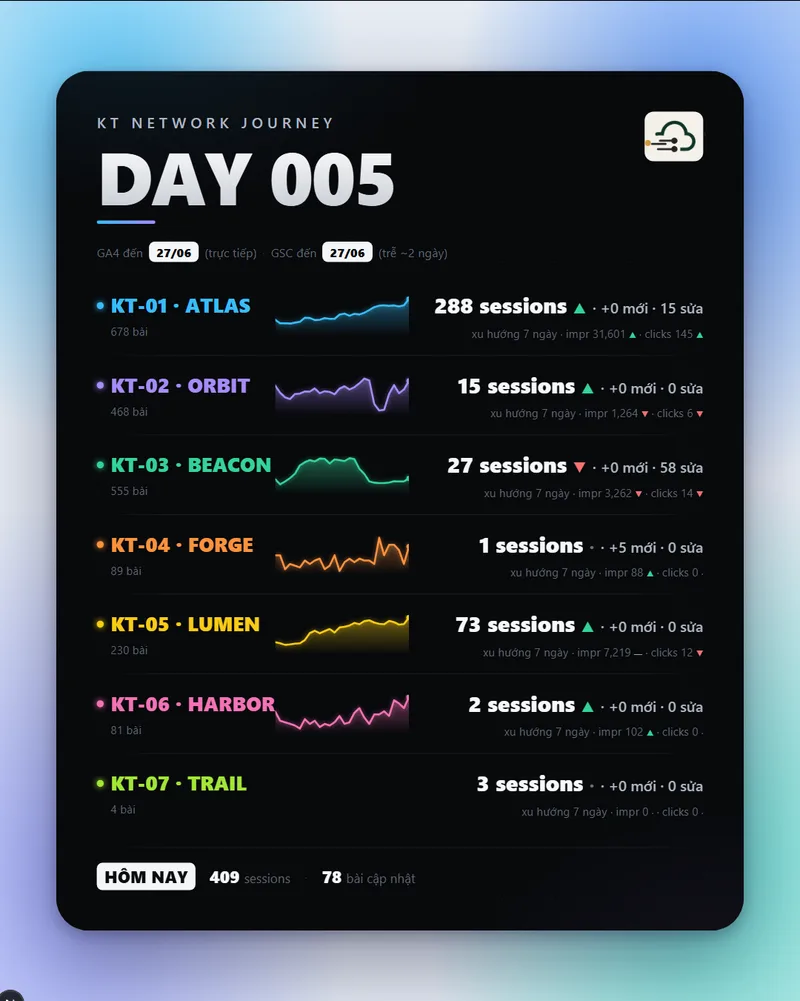
Update #5. Dừng publish để sửa lỗi lặp
Mấy ngày qua thì vẫn chuyện cũ, skill vẫn dính một lỗi do chính mình gây ra.
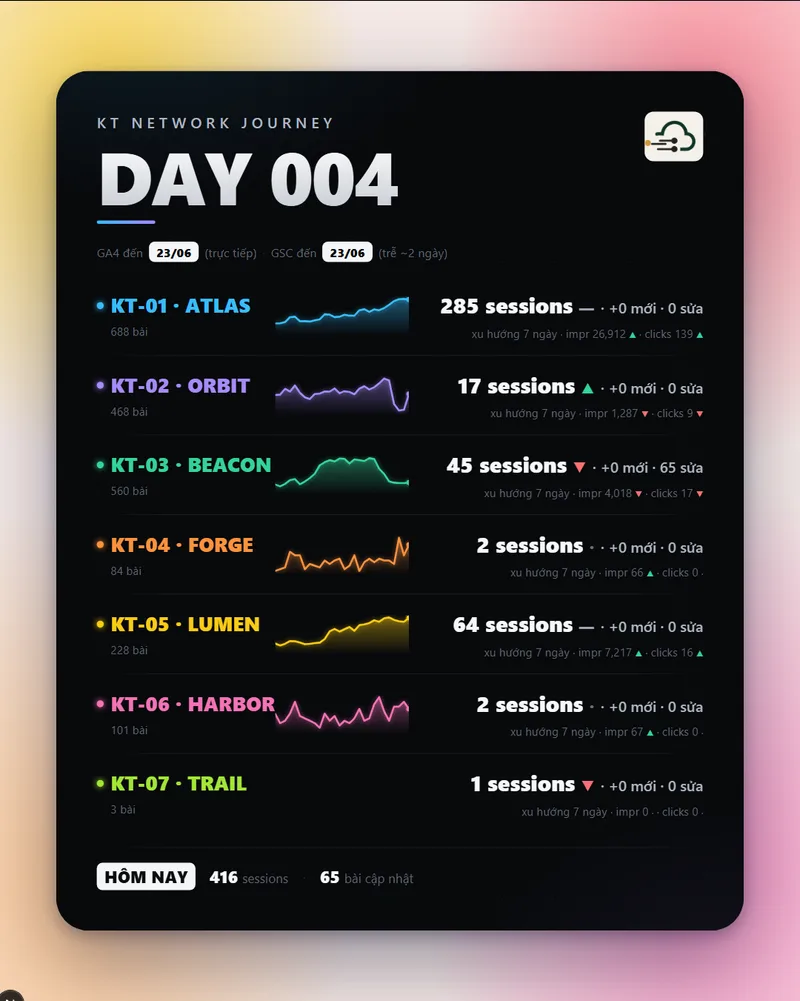
Update #4. Sửa mobile và dọn content
🧩 Hôm nay xử lý khá nhiều cho toàn bộ Network.
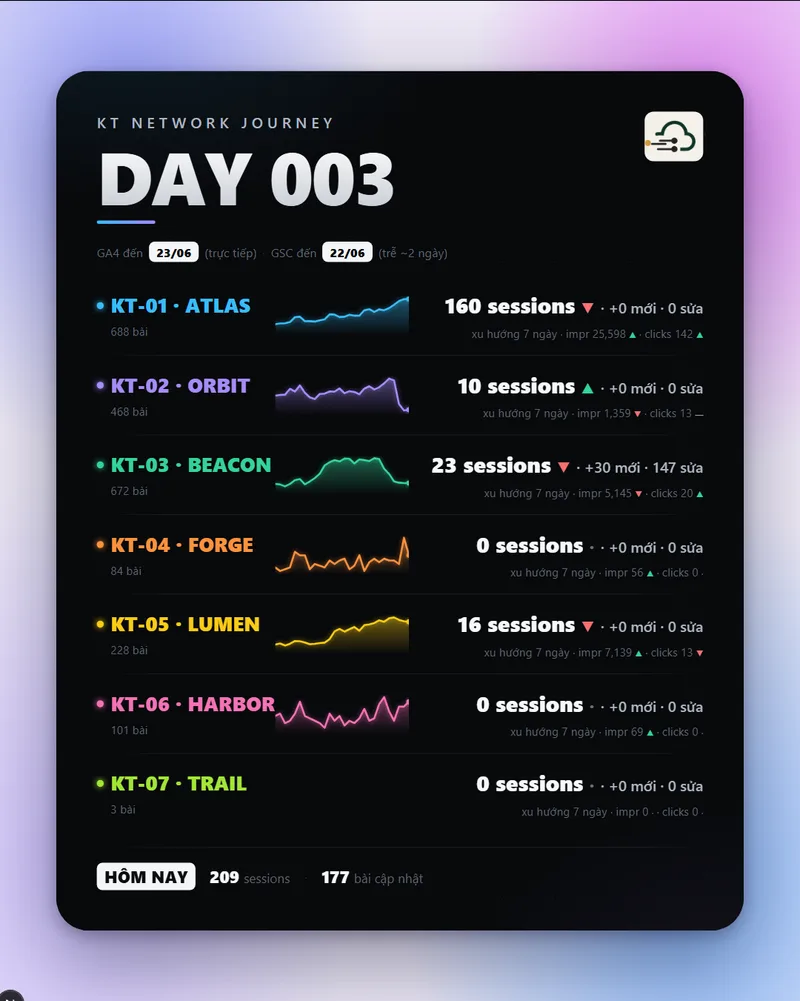
Update #3. Sửa contract viết bài
Vấn đề hôm nay nằm ở skill viết bài.
08 — The studio
Strategy, systems and the final call have one owner.
Vinclair Studio has worked from Vietnam since 2017, with one owner accountable for every release.

Vinclair Studio
Vinclair Studio began in 2017 as a one-person content project. Today the work spans 21+ live sites, three private networks, one YouTube channel, one TikTok channel, and a growing product layer.
AI improves speed and structure. The durable advantage comes from choosing what to build, defining a repeatable standard, and reviewing what ships.
NowThe app and its store listings in 14 languages.
Free on the web now; an Android build is in progress.
5 entries so far, newest on 29 Jun 2026.
09 — Questions
Questions about the portfolio.
Every answer comes from a published Network Journal entry. The update number links to the full report.
Why are the sites shown by code name?
Each site is reported as KT01 ATLAS, KT02 ORBIT, KT03 BEACON and so on. Publishing the domains would show which sites link to each other and make the content easy to copy. Sessions, impressions and article counts are still published for every code name.
Source: Update #5What does “21+ sites” count?
Each final live HTTPS address counts once; redirects and folders still being built are left out. The sites differ a lot in size: on 29 Jun 2026 ATLAS had 678 articles and FORGE had 89.
Source: Update #5Are the articles written by AI?
An AI writing skill drafts them from a brief. In late June the drafts started to open, order their points and close the same way, so publishing stopped while a shared check was built for all seven sites. It compares every new article with older ones before release. On ATLAS more than 300 titles were rewritten by hand.
Source: Update #5Why do the sites run on different stacks?
On purpose. Groups of sites run on Next.js, PHP and WordPress to compare which stack reaches Google results more easily. ATLAS and LUMEN were rising steadily at the start; BEACON moved up and down.
Source: Update #1What happens when a cheaper model is tried?
Xiaomi MiMo v2.5 Pro was tested because its tokens cost less than Sonnet or GPT. Its articles turned rigid, so the writing contract changed: answer the search intent first, write the flow before adding links, and run the validator only as the final gate.
Source: Update #3How does a site earn?
ATLAS uses Amazon Affiliate links. Product suggestions are picked from each article's content and entities and shown as small widgets. The widget is being built as one template so it can roll out across the network instead of being patched into posts one by one.
Source: Update #410 — Contact
Talk about systems, publishing, or the next build.
Write a few lines about the project. The form opens your mail app with the message filled in; nothing is stored on this site.

[email protected]
@giaimaainews
Field notes from the build